Lie With Me

Notes p9 - But I don’t see anyone but him, this slender and distant boy who doesn’t speak, who’s happy just to listen to the two guys talking next to him without interrupting. Without even smiling. p14 - I find it a handsome name, a beautiful identity. I don’t know yet that one day I will write books, that I will invent characters and I will have to name those characters, but I am already sensitive to the sound of identities, to their fluidity. p15 - In any case, I like to repeat his name to myself in secret. I like to write it on scraps of paper. I am stupidly sentimental: that hasn’t changed much. p17 - I feel this desire swarming in my belly and running up my spine. But I have to constantly contain and compress it so that it doesn’t betray me in front of others. Because I’ve already understood that desire is visible. This feeling of love, it transports me, it makes me happy. At the same time, it consumes me and makes me miserable, the way all impossible loves are miserable. Difficulty, you can cope with; you can deploy ruses, try to seduce. There is beauty in the hope of conquest. But impossibility, by nature, carries with it a sense of defeat. p22 - I remember, also, that he’s reserved in a way that sets him apart. I could be put off, but instead it moves me. Nothing touches me more than cracks in the armor and the person who reveals them. p23 - He says that he can no longer be alone with this feeling. That it hurts him too much. p24 - He says: Because you are not like all the others, because I don’t see anyone but you and you don’t even realize it. He adds this phrase, which for me is unforgettable: Because you will leave and we will stay. p30 - Love, it’s mouths that seek, lips that bite, drawing a little blood. His stubble irritates my chin, his hands grab my jaw so that I can’t escape. p35 - I ask myself: Does he regret it? Was it only a stroke of madness for him? A tragic, wrongheaded, even grotesque error? He acts as if nothing happened, or as if everything should be forgotten, buried. It’s even worse than being forgotten, it’s a denial. And then suddenly, I can’t see anything but his rejection. It’s as if he’s negating everything that transpired between us, one body against the other, as if the image has been completely erased. p36 - I discover the pain of missing someone. I miss his skin, his body, which I once possessed and then had taken away from me. It must be given back under threat of madness. p37 - Later I will write about this longing, the intolerable deprivation of the other. I will write about the sadness that eats away at you, making you crazy. It will become the template for my books, in spite of myself. But absence is, first and foremost, silence. p45 - This is important: he sees me in a certain way, a way he will never deviate from. In the end, love was only possible because he saw me not as who I was, but as the person I would become. p49 - He doesn’t notice my excitement when he comes in, or any of the efforts I’ve made either. p52 - All of a sudden I see a sort of admiration return to his face, but it’s a painful admiration; what he likes about me is also what keeps me separate from him. I’m still thinking that everything has to be done according to him and his desires. I’m not sure where this need for another man’s sex comes from but I sense that on the other side of all the repression and self-censoring there exists an equally powerful fervor. p53 - I will repeat to myself: I am for him a boy he fucks, nothing more. I’m reduced to a body, a penis, a function. p54 - He caresses me with hands that know exactly what to do. He bites my hips, my torso. He groans, no longer able to contain it, a sound that he releases maybe without even realizing it himself; he moves me tremendously. p58 - I explain that in general it’s the likelihood that actually matters more than the truth, that the feeling counts more than accuracy, and above all that a place is not a question of topography but rather the way that we describe it—not a photograph but an impression. p70 - I will discover that these books speak to me, and speak for me (and will become aware of the power of literary minimalism, the neutral voice that’s closer to reality). (TB: referencing Herve Guibert’s The Remarkable Adventures (title, perhaps as translated by M Ringwald?) and also the film The Wounded Man.) p76 - Immediately it makes me think of the world I’m excluded from, the friendships he’s developed, all the ordinary days that have nothing to do with me. The friends, the handshakes, crystallize it. p79 - Because this scene not only shows a life lived outside of me. It hurtles me back to a void, to nonexistence, really, in the cruelest way. Because it shows what is usually hidden from me. Because it shows the charm of this mysterious boy and how many attempts must be made before one can get close to him. (And when you’ve been hurt once, you’re afraid to try again later, in dread of enduring the same pain. You avoid getting hurt in an attempt to avoid suffering: for years, this principle will serve as my holy sacrament. So many lost years.) p86 - I wrote the word: love. I did consider using another one. It’s a curious notion, love; difficult to identify and define. There are so many degrees and variations. … But those would have just been words. The truth, the brutal truth, was that I was in love. Enough to use the right word. p89-90 - He smiled so that I could take his smile with me. p92 - Everything in its place, everything reassures me. Except that I miss Thomas. I miss him terribly. And that changes everything. Have you noticed how the most beautiful landscapes lose their brilliance as soon as our thoughts prevent us from seeing them properly? (TB: Yes.) p95 - …who asks himself if it would’ve just been better if his body had been left to die in the crash but who eventually heals, because as is often the case, you eventually heal. p101 - He says: You must have liked him a lot, to look at me like that. p103 - These last words are articulated with the lease possible affect, as if life is just like that sometimes, you spend time together and then lose touch and life goes on—as if there were no breaks from which you never quite recover. p109 - I think: If it was already there, this sadness, from the very first hours of the marriage, if it was so massive that it could not be concealed even then, during these moments of the greatest communion, during that happiest of feasts—how heavy must this weight have become in the years that followed? p116 - My father told me about you. p117 - He says: Though my father never reads books, he’s read yours. He intimates that the books are in their house, though not in plain sight; no doubt they’re tucked away in a closet somewhere or in the attic. p118 - I give in and say: The story of two inseparable friends who end up being separated by time. He smiles. I urge him not to read anything personal into it. I specify my books are fiction, that memoir doesn’t interest me. (TB: lol get real buddy, we’re all writing about ourselves and our loves and our losses. Nothing else exists.) p148 - I just wanted to write to tell you that I have been happy during these months together, that I have never been so happy, and that I already know I will never be so happy again. Review A heartbreaking book. A line comes for us in the final 20 pages that made me stop and put the book to my face and take deep breaths. Then we are taken through it for the remainder, and at the end I cried. I cried. ...

March 7, 2025 · Philippe Besson · 

Love, Leda

I think this is my favorite book I’ve read in a book club. I am afraid to share what I love so much about it. But I see myself in this book in a way I never have so completely. Not all of Leda is me, but so much is that it felt fragile and scary to read at times. Sometimes it was a loving familiarity, or even a pleading with him to do something different. My copy is riddled with sticky tabs sometimes two to a page and often every other page so that it looks like the centrepiece of a research project. I have filled the margins with pencil scratchings. I have no idea if I could ever describe my feelings for it. ...

February 28, 2025 · Mark Hyatt · 

Queer

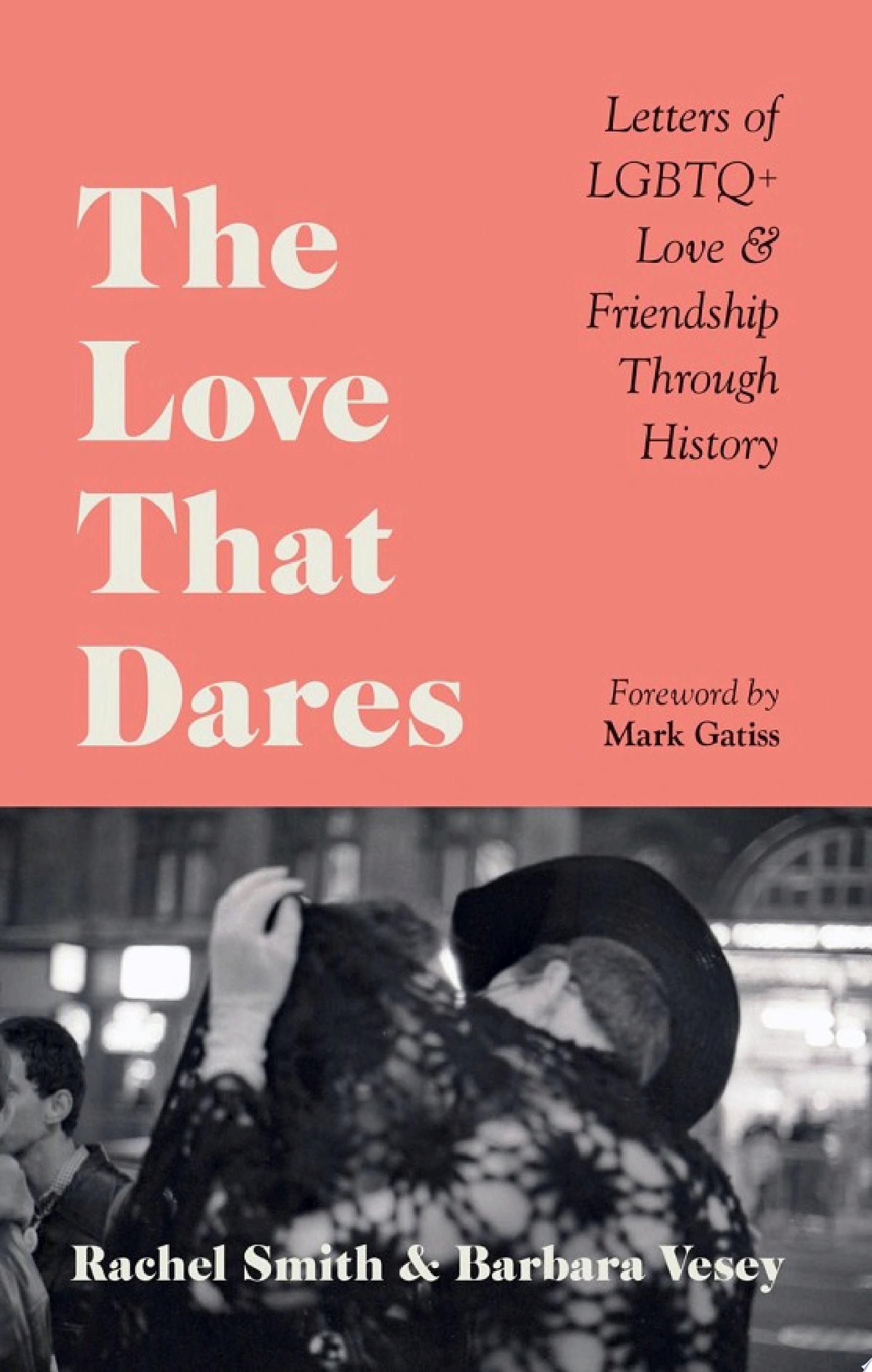
Notes p2 - What Lee looked for in any relationship was the feel of contact. p7-8 - Actually, Moor’s brush-off was calculated to inflict the maximum hurt possible under the circumstances. It put Lee in the position of a detestably insistent queer, too stupid and insensitive to realize that his attentions were not wanted, forcing Moor to the distasteful necessity of drawing a diagram. p15 - The result was ghastly. || As Lee stood aside to bow in his dignified old-world greeting, there emerged instead a leer of naked lust, wretched in the pain and hate of his deprived body and, in simultaneous double exposure, a sweet child’s smile of liking and trust, shockingly out of time and place, mutilated and hopeless. p23 - Lee watched the thin hands, the beautiful violet eyes, the flush of excitement on the boy’s face. An imaginary hand projected with such force it seemed Allerton must feel the touch of ectoplasmtic fingers caressing his ear, phantom thumbs smoothing his eyebrows, pushing the hair back from his face. Now Lee’s hands were running down over the ribs, the stomach. Lee felt the aching pain of desire in his lungs. His mouth was a little open, showing his teeth in the half snarl of a baffled animal. He licked his lips. p24-25 - [Allerton] was forced to ask himself: “What does he want from me?” It did not occur to him that Lee was queer, as he associated queerness with at least some degree of overt effeminacy. Allerton was intelligent and surprisingly perceptive for a person so self-centered, but his experience was limited. He decided finally that Lee valued him as an audience. p32-33 - In the dark theater Lee could feel his body pull toward Allerton, an amoeboid protoplasmic projection, straining with a blind worm hunger to enter the other’s body, to breathe with his lungs, see with his eyes, learn the feel of his viscera and genitals. Allerton shifted in his seat. Lee felt a sharp twinge, a strain or dislocation of the spirit. His eyes ached. He took off his glasses and ran his hand over his closed eyes. p45 - (Baked Alaska and Lee’s dish idea.) p50- “How about dinner tonight?” asked Lee. Allerton said, “No, I think I’ll work tonight.” Lee was depressed and shattered. The warmth and laughter of Saturday night was lost, and he did not know why. In any relation of love or friendship, Lee attempted to establish contact on the non-verbal level of intuition, a silent exchange of thought and feeling. Now Allerton had abruptly shut off contact, and Lee felt a physical pain, as though a part of himself tentatively stretched out towards the other had been severed, and he was looking at the bleeding stump in shock and disbelief. p50 - (TB: around this area, Lee begins to really press on Allerton. He starts offering him money to spend time with him, but it’s not phrased like that. He says things like, “I subsidize non-production. I will pay you twenty pesos not to work tonight.” He is surprised and hurt when Allerton rejects this. It doesn’t stop him from repeating it a few times later.) p51 - He got up and walked out. He walked slowlly. Several times he leaned on a tree, looking at the ground as if his stomach hurt. Inside his apartment he took off his coat and shoes, sat down on the bed. His throat began to ache, moisture hit his eyes, and he fell across the bed, sobbing convulsively. He pulled his knees up and covered his face with hands, the fists clenched. Towards morning he turned on his back and stretched out. The sobs stopped, and his face relaxed in the morning light. p52-53 - He forced himself to look at the facts. Allerton was not queer enough to make a reciprocal relation possible. Lee’s affection irritated him. … [Lee] had no close friends. He disliked definite appointments. He did not like to feel that anybody expected anything from him.. He wanted, so far as possible, to live without external pressure. Allerton resented Lee’s action in paying to recover the camera. … “I liked him and I wanted him to like me,” Lee thought. “I wasn’t trying to buy anything.” || “I have to leave town,” he decided. “Go somewhere. Panama, South America.” … A feeling of cold desolation came over him at the thought of arriving in another country, far away from Allerton. p56-60 – (TB: an extended “routine” from Lee, initially to Allerton and his chess partner and implied lover, Mary, and concluded after they have left. Lee is telling stories and it isn’t clear to me if he is sharing memories of real things or just making things up. It is basically irrelevant as the ‘routine’ on Corn Hole Gus’s Used Slave Lot - a fantasy(?) of Lee taking a slave boy and seeking to trade him in for a pure Beduin. These are children, by the way. In the appendix/original introduction by Burroughs, he describes these as flights of fancy, routines, Lee settling into his writing. Okay.) p65 - (TB: Lee is so pining for any attention from Allerton that he contemplates buying a stake in the bar where Allerton keeps a tab, so that the man could not ignore him. Awful.) p72 - (TB: At a point in the story where Lee and Allerton are more or less traveling outside of Mexico by themselves, Lee sets up a contract where Allerton will sleep with him twice a week. This feels abhorrent and unreal. Why would Lee want this if he loves Allerton? Doesn’t he want there to be some warmth? At no point does Allerton ever express anything but disgust for Lee. Anyway, on page 72 Lee shows him where to buy sex from women where they’re at, and encourages him. I really don’t understand Lee at all. Isn’t he haunted by that thought? It’s so bizarre.) p79 - [Lee] had an arm around Gene’s shoulders. They were both wearing swimming strunks. The sea was glassy. He saw a fish rise in a swirl of water. He lay down with his head in Allerton’s lap. He felt peaceful and happy. He had never felt that way in his life, except maybe as a young child. He couldn’t remember. The bitter shocks of his childhood had blacked out memory of happy times. p80 - “While we are in Ecuador we must score for Yage,” Lee said. “Think of it: thought control. Take anyone apart and rebuild to your taste. Anything about somebody bugs you, you say, ‘Yage! I want that routine took clear out of his mind.’ I could think of a few changes I might make in you, doll.” He looked at Allerton and licked his lips. “You’d be so much nicer after a few alterations. You’re nice now, of course, but you do have those irritating little peculiarities. I mean, you won’t do exactly what I want you to do all the time.” (TB: Holy shit, can you imagine someone saying this to you? This is insane! How can you think that way about someone?) p113 - I have dreamed many times I was back in Mexico City, talking to Art or Allerton’s best friend, Johnny White, and asking where he was. Dream about Allerton continually. Usually we are on good terms, but sometimes he is inexplicably hostile, and when I ask why, what is the matter, his answer is muffled. I never find out why. (TB: this is from the last chapter, 2 years after the events of the book, and notably the writing has changed from third-person to first-person. Anyway, I recognize these dreams. Have had them. But for Lee to think that hostility from Allerton could be inexplicable demonstrates no insight.) Appendix, Burroughs’s original introduction: p131: “I glance at the manuscript of Queer and feel I simply can’t read it. My past was a poisoned river from which one was fortunate to escape, and by whicih one feels immediately threatened, years after the events recorded—painful to an extent I find it difficult to read, let alone to write about. Every word and gesture sets the teeth on edge.” p135 - I live with the constant threat of possession, and a constant need to escape from possession, from Control. So the death of Joan brought me in contact with the invader, the Ugly Spirit, and maneuvered me into a lifelong struggle, in which I have had no choice except to write my way out. Review I picked this up recently because I wanted to read this before watching Luca’s adaptation with Daniel Craig. Also because I have been reading a lot of McCarthy and Hemingway over the past year or so but am desperately sick of reading straight relationships and reading Love, Leda made me yearn to read more gay writing. ...
February 1, 2025 · William S Burroughs · 

So Much for Life

Table of Poems Title Page Flag Poem. (cornflakes) 31 Favorite Daggers. 74 Favorite Poem. (rip) 86 Favorite “Let him go in mind” 91 Favorite True Homosexual Love. 105 Favorite Dear Friend Go Away, Please. 106 Favorite There You Go Baby. 148 Favorite He is a Rose. 155 Favorite New brave wired ones. 24 Poem Queers 35 Poem How Odd. 43 Poem “soon the mind will be heavy” 62 Poem I Tell You Now. 65 Poem From Hospital. 67 Poem Bootless. 70 Poem “Two queers live on a hill” 80 Favorite “oral pictures of love” 93 Poem Nerves Blotted Out. 108 Poem “I love my arse to be sucked” 112 Poem “desert bones” 114 Poem All Sunday Long. 122 Poem Radio-Me: The Big Send Up of Everything Around Us. 130 Poem “The world is at war” 139 Poem To my mother, dead. 141 Poem Looking for a Poem. 20 Stanza Between You and Humanity. 21 Stanza “I can’t sell my penis because” 41 Stanza This Poem. 54 Stanza Answer don’t move. 119 Stanza Reatity. 127 Stanza I am frozen with knowledge. 148 Stanza Review I picked this up from the bookstore after loving Love Leda so much. I have been trying to read a little more poetry. Like my recent review for Rupi Kaur’s The Sun & Her Flowers, I have no idea how to review poetry. I don’t know what good poetry looks like or what bad poetry looks like. All I know is that sometimes words are strung together and they give me an emotional reaction. So that’s what I’m rating this collection on. ...

January 13, 2025 · Mark Hyatt ·